
Shopify Case Study: How Bissinger's Scaled a 350-Year-Old Chocolate Brand Faster Than Ever Before
Shopify Case Study: How Bissinger's Scaled a 350-Year-Old Chocolate Brand Faster Than Ever Before
Bissinger's has been making chocolate since 1668, when King Louis XIV named the house "Confectioner to the Empire." In 2019, the Abel family bought the legendary French brand and brought it onto Shopify Plus. Today they're scaling a centuries-old name faster than it has ever grown, by controlling every link in the chain and listening hard to the customer.
Industry
Location


Meet the brand founder
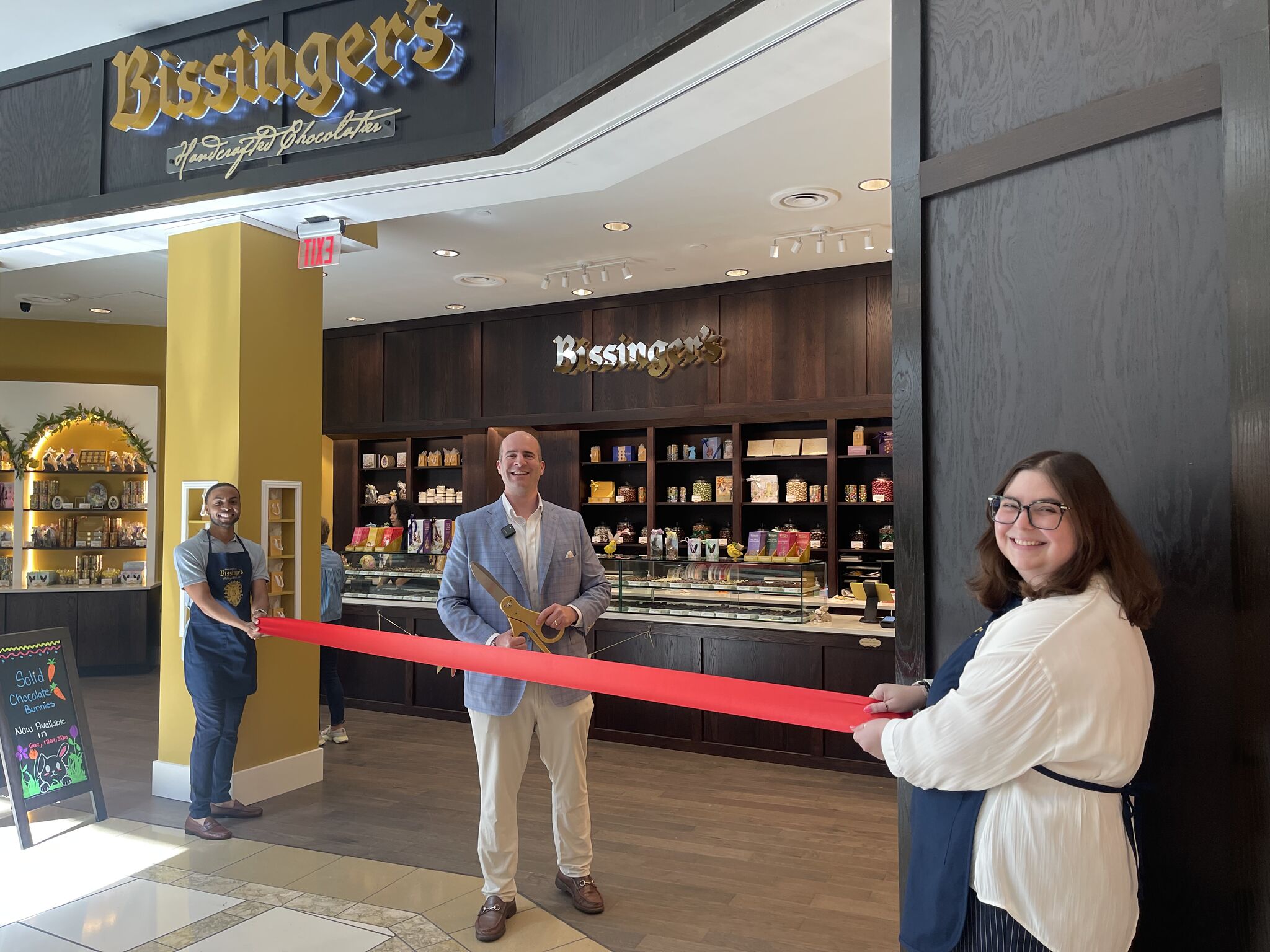
It started, as a lot of things in the Abel family do, with chocolate.
Dan Abel's parents founded Chocolate Chocolate Chocolate Company in 1981. The rule was simple and never changed: premium ingredients, small batches. The family still owns and operates that company today. It runs on Shopify too, with both DTC and wholesale arms. Dan's education in confectionery didn't come from a business school. It came from his parents, who handed down a way of working — handmade, in small batches, with the finest ingredients available.
So when the opportunity came in 2019 to buy Bissinger's, the math was emotional before it was financial.
Bissinger's is not an ordinary acquisition target. The house traces back to 1668 Paris, where it earned the title "Confectioner to the Empire" from King Louis XIV. Many of its recipes date to the 1800s. It is, by any measure, a piece of living history — a 350-year-old French chocolate brand with a story most companies would invent if they could.
The Abels didn't need to invent it. They just needed to recognize that Bissinger's shared their DNA. Same obsession with handmade. Same insistence on small batches. Same finest-ingredients rule that Dan's father built his whole company on four decades earlier.
They felt they were the ones who needed to carry the legacy forward. And here's the part that surprised even them: under the family's stewardship, Bissinger's has scaled faster than it ever has in its entire history.
But a legacy brand comes with a catch. Past success doesn't pay today's bills. No matter how storied the name, you still have to bootstrap it, still have to find a new clientele, still have to earn the next sale. That meant new product launches, new marketing channels, events, travel, and a lot of late nights.
The first real win
The proof came from wholesale.
Bissinger's launched a national wholesale program, and within six months it had a strong re-order rate. That number — re-orders, not just first orders — was the signal. Buyers weren't just trying the product. They were coming back for more. A re-order rate is a market telling you it actually wants what you're selling.
What drove that early traction was a stack of unglamorous fundamentals done well: great packaging, on-time delivery, sampling, and demo support. The chocolate had to be beautiful in the box and reliable on the truck, and customers had to be able to taste it before they bought a case of it.
Underneath all of it was a posture the Abels brought from day one — be as hands-on as humanly possible.
"We feel by controlling all aspects of the business, we give our customers the best experience."
That's not a slogan. Bissinger's owns its stores, runs its own customer service department, operates its own manufacturing facility and distribution center, and keeps its creative team in house. Every Bissinger's confection is still made by hand, many from recipes written in the 1800s. The family is genuinely excited to tell the story and craft the product — and they believe that excitement only translates to customers if they keep their hands on every part of the process.
The wholesale win revealed the model. Control the experience end to end, get the fundamentals right, and the re-orders take care of themselves. The catch, of course, is overhead — as each part of the operation scales, growth has to keep climbing to support it.

How the business runs today
Dan's role is Owner and VP, but the real description is "everything." He works across marketing, sales, new product development, and administration. In a small team running a vertically integrated operation, the owner doesn't get to specialize.
His week starts the same way every day. He reviews the website first. Then bills. Then emails. It's a deliberately grounded routine — check the storefront the way a customer sees it, then handle the money, then handle the people. The big-picture work comes after the house is in order.
The Abels describe themselves as the "1,000 feet in the air" people — the ones who set the look, the feel, and the message. They act as their own marketing directors. But they've learned to keep that altitude only for the things that define the brand, and to bring in specialists for the executional heavy lifting.
The operating philosophy hasn't moved since 1981. Premium ingredients. Small batches. Hands on everything. The scale is bigger now. The rules are not.
Leveraging experts, agencies & apps
For the first stretch, the Abels did it all themselves. That changed in 2019, when they started working with outside agencies for marketing. They began with one. Today they work with four.
The logic behind which work stays in and which goes out is consistent: keep the creative and the brand voice in house, hire specialists for the channels that need scale and technical depth. The Abels handle the look and feel of the catalog, the boutiques, and the website. Then they lean on partners to execute.
The agency relationships that have moved the needle most:
Catalog marketing — a catalog agency handles the merge/purge and acquisition list rental, the data-heavy work behind a print catalog that the team can't do alone.
Paid search — a dedicated group runs search, a channel where small optimizations compound.
Paid social — handled by the same kind of specialist focus rather than spread thin internally.
PR — outside help telling a story that, frankly, tells itself once it reaches the right ears.
Freelance designers — brought in to bring all the pieces together under the family's creative direction.
On the tools side, a few Shopify apps are load-bearing for daily operations:
Zest (multi-ship) — essential for a brand that ships perishable, gift-able product to many addresses.
Gorgias — powers the customer service operation that Bissinger's deliberately keeps in house.
Attentive — runs text and email, the direct line back to customers.
Not everything worked. The clearest failure mode: some agencies didn't understand the seasonality of the business. Chocolate is not a flat-demand category. An agency that treats December like March is going to misfire, and the Abels learned to screen for that understanding early.
"They think every business is cookie cutter and fail to learn the small details that make the brand stand out."
That's the core lesson. The best partners learn the texture of the business — the seasonal swings, the brand quirks, the things that don't show up in a standard playbook. The worst ones bring the playbook and expect the brand to conform to it.
Big challenges
The hardest part of scaling Bissinger's has been a moving target: finding the customer where they actually are.
The channel that works is never the channel that works forever. From 2016 to 2018, the big push was national wholesale expansion. From 2020 to 2022, everything pivoted to direct-to-consumer and online. From 2023 onward, the team has pushed national wholesale again — while also circling back to brick-and-mortar stores in key cities.
Each pivot was forced by a real change in the landscape: customer acquisition costs shifting, distribution channels changing, or buying behavior moving somewhere new. There was no single right answer to lock in. There was only the discipline of watching where the customer went and being willing to follow.
The other persistent challenges are the ones every scaling consumer brand knows by name — customer acquisition costs, growing new products, and shipping. For Bissinger's, shipping carries extra weight: handmade chocolate has to arrive intact, on time, and often as a gift.
Advice to brands on their way to 7–8 figures
Dan's advice comes from running a business where every dollar is accounted for and every customer is listened to.
It isn't about finding a growth hack. It's about staying close enough to the work that you can actually see what's happening.
Make every penny earn. Spend like the money is hard to get, because the discipline itself is the advantage.
Be careful with big funding. When a large fund lands, you stop spending as wisely. Constraint forces good decisions; abundance hides bad ones.
Work in the business. Not just on it. Stay close enough to the day-to-day that the details don't get away from you.
Listen to your customer. They will tell you where they are and what they want — your job is to be paying attention when they do.
Hire specialists, keep your voice. Outsource the executional depth, but never hand over the look, feel, and message that make the brand yours.
Screen partners for the details. The agencies worth keeping learn the small things — seasonality, quirks, what makes you stand out — instead of running a generic playbook.
What’s next for the brand
The next chapter is brick and mortar — at scale.
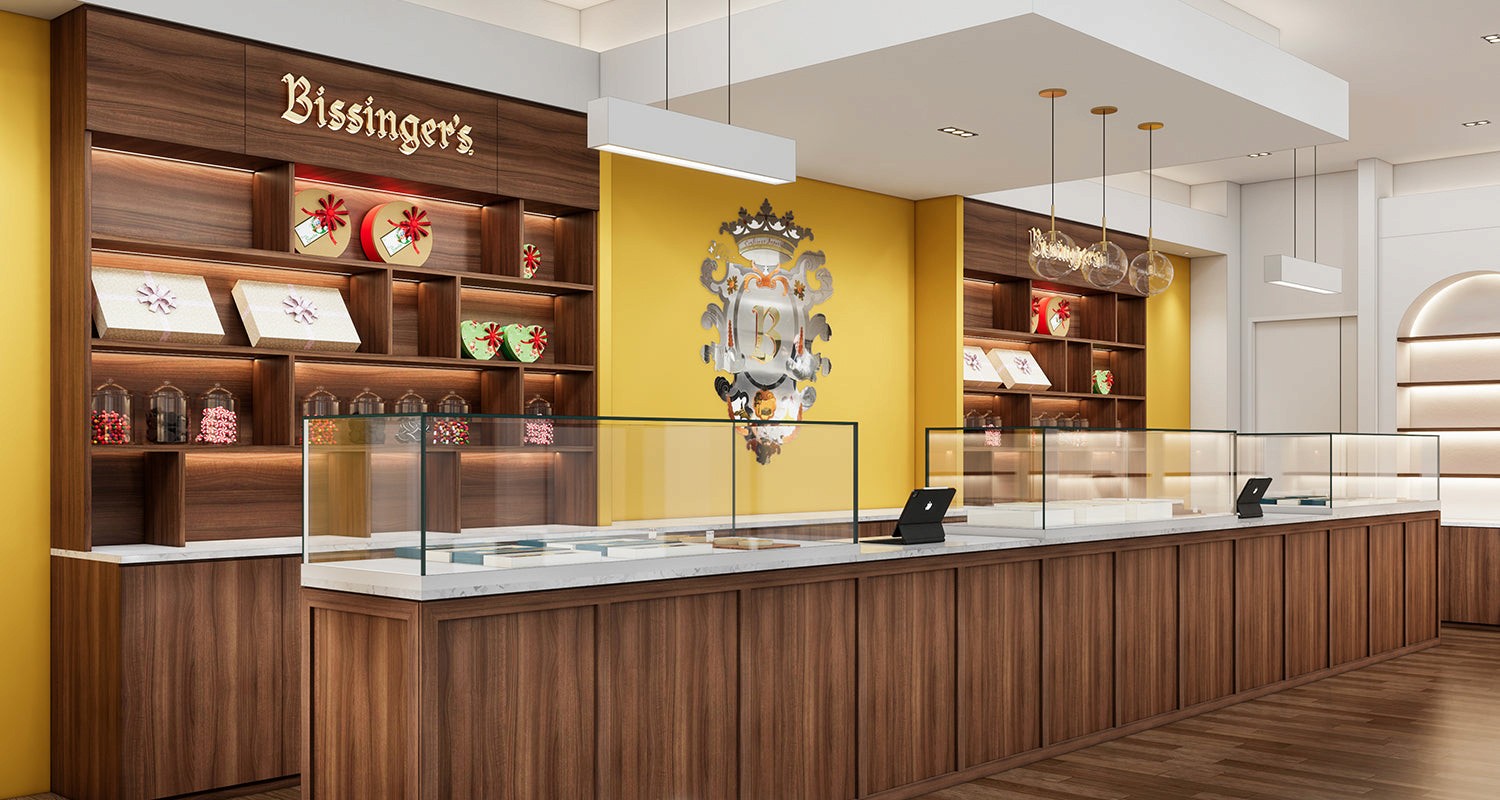
The plan is 12 new retail boutiques nationwide. Last year Bissinger's opened its first four, in Palm Beach Island and Key Biscayne in Florida, in Nashville, and in New York City. This year the brand is opening in Indianapolis, Sarasota, Tampa, Cincinnati, Boca Raton, two locations in Boston, and one in New Jersey just outside New York City.
These aren't ordinary storefronts. Each boutique is meticulously designed to deliver the full Bissinger's experience — imported stone, rich oak fixtures, and the brand's signature gold-painted walls. At the center of every store sits a jewelry-style case filled with more than 65 handmade chocolates.
The strategic goal underneath the expansion is to merge DTC and physical retail into one experience, so a customer can encounter Bissinger's online or in person and feel the same brand either way. It's the same instinct that has driven the family since 1981 and through every channel pivot since: control the experience, stay hands-on, and meet the customer wherever they are.
A 350-year-old brand, scaling faster than it ever has — by treating every penny, every recipe, and every customer like it still has everything to prove.
Meet the experts behind brands like this
Scaling a Shopify brand takes more than a good idea – it takes the right people, systems, and partners at the right stage. Meet the experts who support brands like this on shopexperts.com