
Shopify Case Study: How Hobbiesville Scaled to $5M/Month Selling Collectibles
Hobbiesville is a Shopify-based collectibles brand that scaled to $5 million per month by building a mobile-first ecommerce experience, curating high-demand inventory, and focusing on repeat customers. In this Shopify case study, we break down how the founders turned a fragmented hobby market into a scalable ecommerce business.

Industry
Location


Meet the brand founder
The idea emerged during lockdown.
His co-founder Logan had unearthed his childhood Pokémon cards and noticed something unusual. Demand was exploding. Prices were climbing. Collectors were flooding back into the market. But the buying experience felt outdated and unreliable.
You either traded peer-to-peer with risk.
Shopped at small local stores with limited inventory.
Or bought from faceless corporations that did not understand the community.
There was no trusted, mobile-first platform built specifically for collectors.
That gap became the opportunity.
They launched Hobbiesville with the goal of professionalizing the hobby shop experience and bringing it online in a modern way. What began in a small storefront in Kemptville, Ontario quickly transformed into something much larger.
The early days were not slow or cautious. They were chaotic.
Within weeks, the storefront felt less like a retail space and more like a fulfillment warehouse. Nearly 95 percent of the business was online from day one. Stacks of bubble mailers covered the floor. Thousands of cards were being processed daily. Growth was not gradual. It was immediate.
They overwhelmed the local post office almost instantly, arriving each day with more packages than a small-town branch could handle. What began as a simple shop quickly revealed itself to be a national ecommerce operation.
Within four months, it was obvious the original space would not support the scale. Less than ten months after opening, they moved into a larger retail location, followed shortly by a dedicated fulfillment warehouse.
The spark had turned into velocity.
The first real win
The first real win was not a viral moment. It was operational pressure.
The turning point came when they realized they were overwhelming the Kemptville post office daily. It was not a one-time spike. It was consistent volume. Hundreds of packages, every day.
That consistency changed everything.
Online revenue was doubling month over month in the first four months. Orders came from across Canada and internationally. Repeat customers began driving growth. It was no longer local hobby demand. It was global ecommerce.
“It wasn’t just a big sales day. It was compounding growth.”
The team understood they were not just selling cards. They were building a trusted platform in an industry that traditionally lacked one.
Early growth came from three strategic pillars.
First, availability. When competitors avoided risky inventory during supply chain uncertainty, Hobbiesville leaned in. They stocked hard-to-find releases and niche products collectors were actively hunting for.
Second, deep curation. They did not just list products. They curated what the community actually wanted.
Third, digital experience. While much of the hobby space relied on outdated websites, they invested heavily in a clean, mobile-first platform and later an industry-leading app.
By pairing rare inventory with seamless checkout, they turned one-time buyers into loyal repeat customers. As mobile traffic surged, they doubled down on app-exclusive drops and real-time notifications. The app quickly became their primary growth engine.
How the business runs today
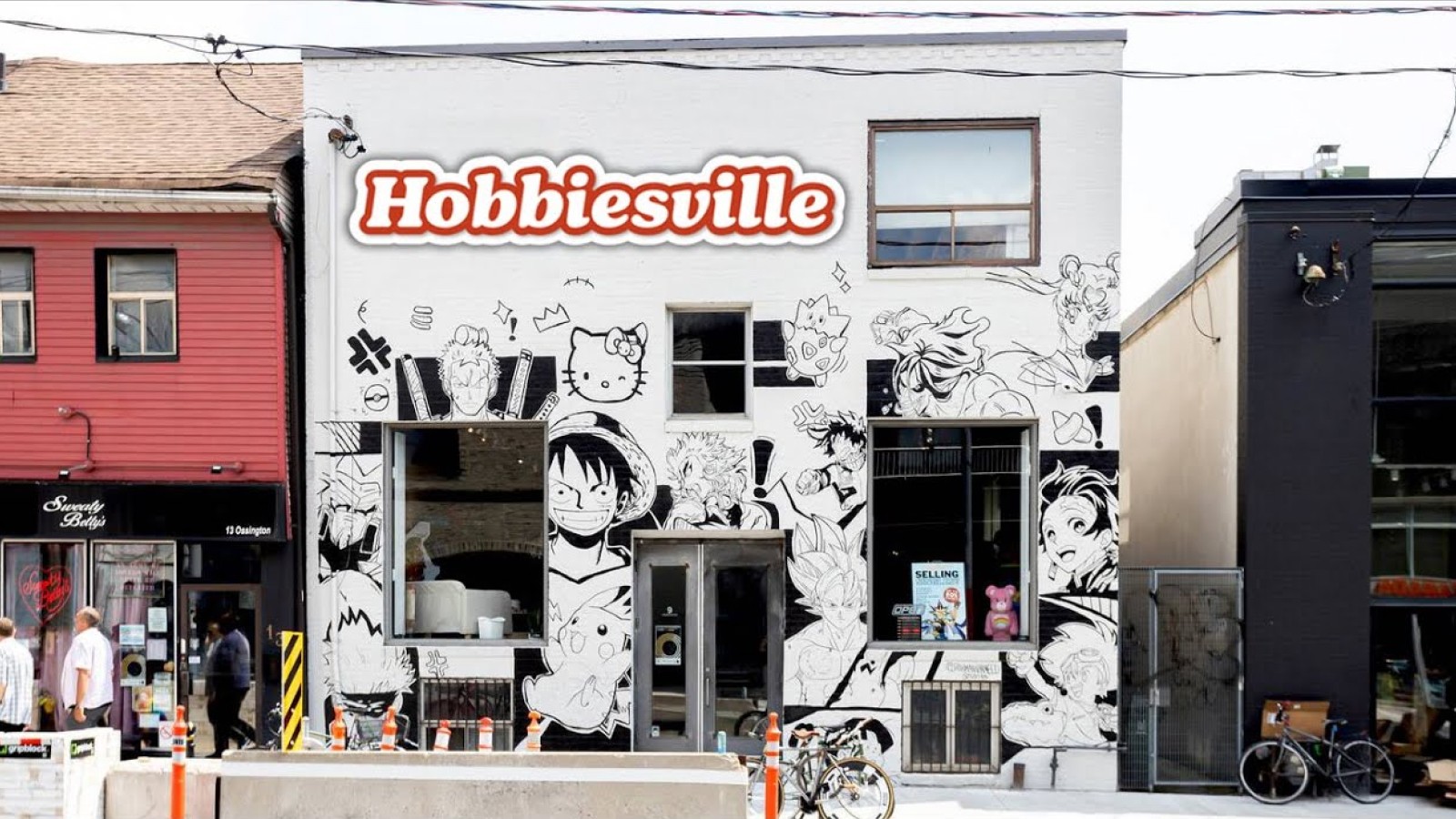
Today, Hobbiesville operates multiple retail locations and a large-scale distribution center. Revenue sits at approximately $5 million per month, driven primarily by ecommerce.
Edmond’s role has remained consistent since day one: strategy, technology, and finance.
He does not manage retail floors or warehouse logistics. Instead, his focus sits on infrastructure.
On the technology side, he oversees continuous evolution of the website and mobile app. Performance, UX, scalability, and drop reliability are constant priorities.
On the finance side, he manages banking relationships and works closely with the accounting team to monitor cash flow, margins, and overall financial health.
On the strategy side, he works directly with his co-founder to map expansion plans, product diversification, and long-term positioning.
A typical week includes reviewing site performance, evaluating retention data, analyzing customer behavior, and aligning financial forecasts with inventory decisions. Meetings with banking partners and the accounting team are routine. So are roadmap discussions about new markets and product streams.
What he no longer does is manual fulfillment or inventory handling. The company now has dedicated retail teams and a structured distribution center operation.
The focus is no longer survival. It is optimization at scale.
Leveraging experts, agencies & apps
From the beginning, they chose a hybrid approach.
Strategy stays in-house. Specialized execution is supported by partners.
Rather than outsourcing the business to agencies, they integrated best-in-class app partners for specific growth pillars.
The biggest impact has come from technical and communication partners:
Reactiv powers their native mobile app and mobile commerce infrastructure. The app is now a primary revenue driver.
Klaviyo manages email and SMS segmentation, enabling personalized drops and automated flows.
Smile runs the loyalty program, critical in a community driven by repeat buyers.
Adoric supports bundling and automated discounts to increase AOV.
These tools allow the internal team to stay focused on roadmap and strategy while leveraging enterprise-level infrastructure.
Not every external partnership worked.
PR and paid advertising agencies were the most difficult fits. Several agencies lasted less than three months. Most relied on generic playbooks that did not translate to the high-velocity collectibles space.
“The hobby market moves differently. Standard playbooks fail here.”
The lesson was clear. For niche industries, deep cultural understanding matters more than agency reputation. For many creative and marketing functions, keeping execution in-house or working with niche specialists proved more effective.
Big challenges
The hardest challenges were capital and macro volatility.
Inventory must be purchased upfront and often in bulk. Early on, traditional banks struggled to understand the value of collectibles inventory. Securing credit lines required proving turnover consistency and retention strength.
At the same time, supply chain disruptions and shifting consumer behavior created instability.
The solution was discipline.
They became highly focused on financial reporting and turnover data. Clear metrics built credibility with banks. Diversifying product streams reduced reliance on any single release cycle.
Scaling required financial maturity as much as operational growth.
Advice to brands on their way to 7–8 figures
The advice is direct and practical.
1. Obsess over your financial statements.
Know your P&L. Know your cash flow forecast. Growth without capital discipline leads to walls.
2. Stay a jack of all trades.
If you outsource every skill you do not understand, your margins disappear. Learn the fundamentals before hiring specialists.
3. Network intentionally.
Talk to founders in your niche. Talk to founders outside your niche. Patterns repeat across industries.
4. Do not outsource strategy.
Agencies execute. Founders own vision and margins.
5. Stop looking for saviors.
Look for tools. Bring in partners only when you have a defined problem and know exactly how they help solve it.
The difference between scaling and stalling is clarity around capital, capability, and control.

What’s next for the brand
The next 12 to 24 months are focused on scaling from national leader to North American household name.
The target is nine figures annually.
The roadmap centers on three priorities:
Online dominance through continued U.S. expansion and mobile app growth.
Logistics optimization to support massive volume with flawless speed.
Mobile-first community building, transforming the app into a daily destination rather than a transactional tool.
“In the beginning, it was growth at any cost. Now, it’s operational longevity.”
The focus has shifted from pure expansion to building internal systems that can support nine-figure scale without compromising customer experience.
What began as a rediscovered Pokémon binder has evolved into a technology-driven collectibles platform operating at national scale.
The community was always there. The opportunity was always there.
The difference was execution.
Meet the experts behind brands like this
Scaling a Shopify brand takes more than a good idea – it takes the right people, systems, and partners at the right stage. Meet the experts who support brands like this on shopexperts.com