
From five backyard bees to $80K/month: Building a 7-figure education brand around pollinators
After mason bees revived his apple harvest, Dave Hunter founded Crown Bees to educate Americans about native pollinators-building a national, mission-driven movement through smart tools and steady growth.

Location

United States
Industry
Education
Brand Founded
2008

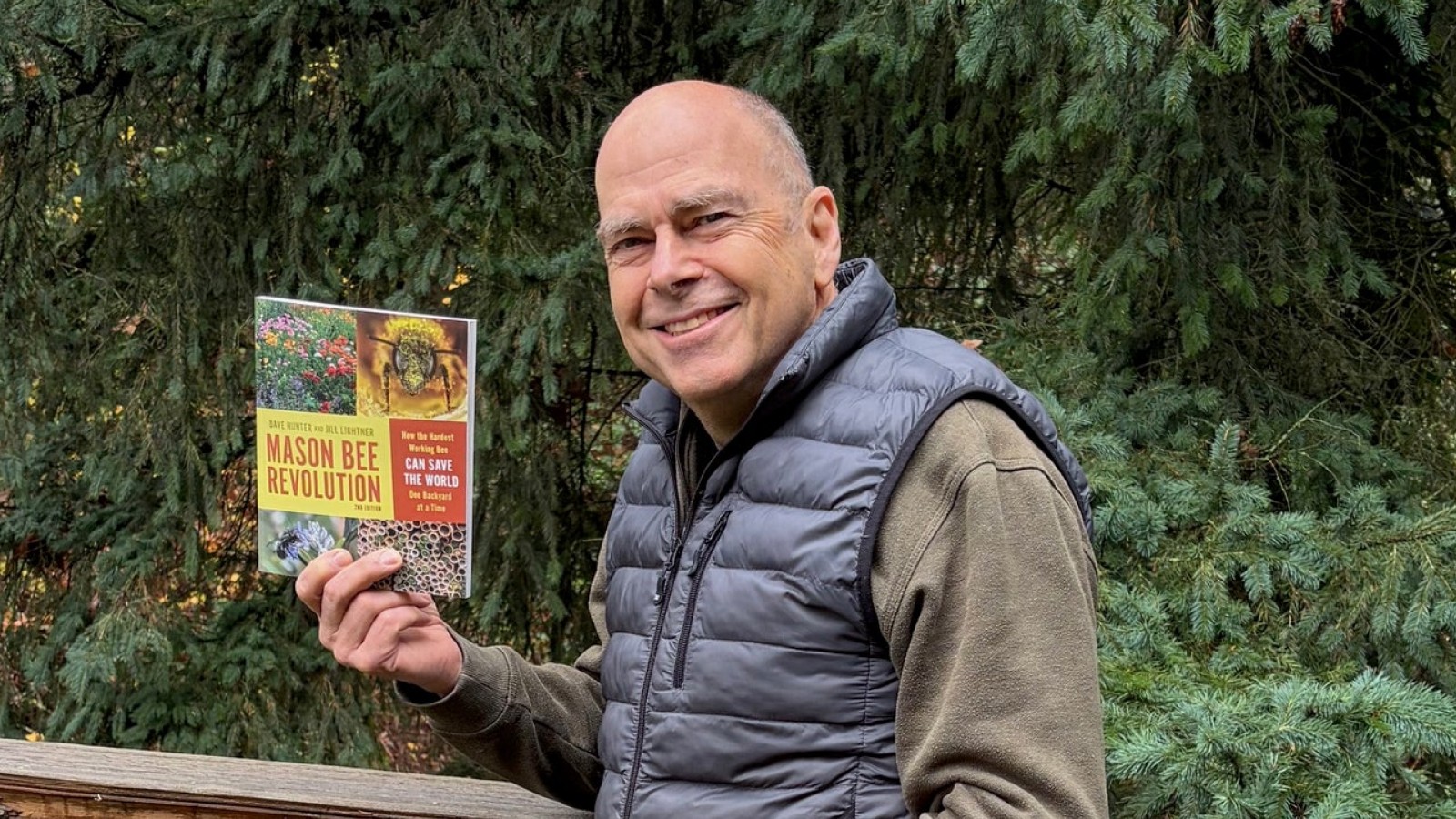
Meet the brand founder
Thirty years ago, Dave Hunter wasn’t planning to start a company.
He was just trying to figure out why his apple tree wasn’t producing.
His wife had come home from a class and mentioned something curious. Their instructor had an apple tree the same size as theirs — but it was covered in fruit. Thousands of apples. Meanwhile, Dave’s tree produced five or six.
“What are they doing differently?” he asked.
The answer: mason bees.
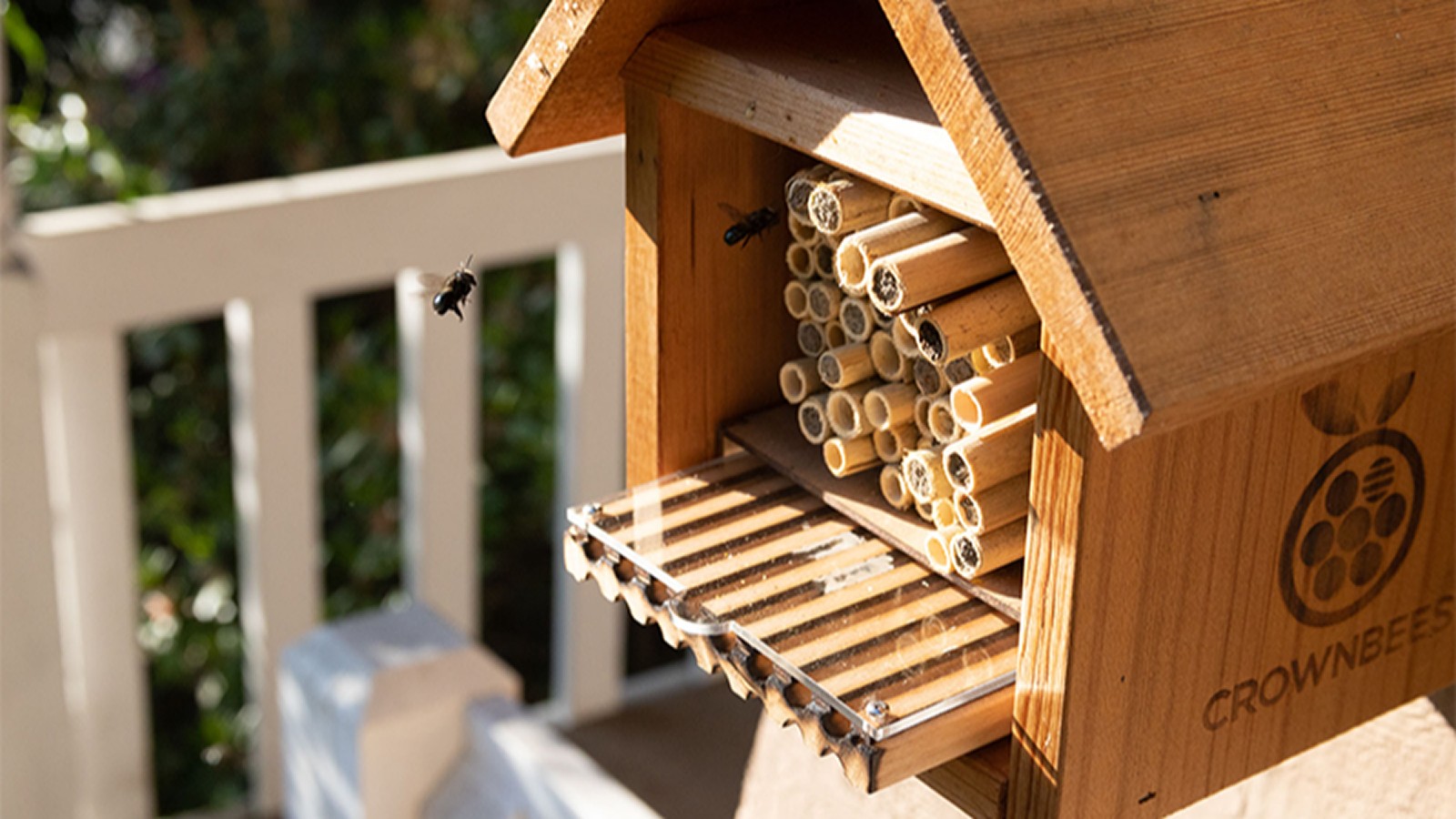
There was no Google back then. No YouTube tutorials. Dave went to the library, pulled books off shelves, and started researching native pollinators. Then he built his first “bee hotel” in the backyard.
Within a few years, their apple tree was loaded with fruit.
That was the spark.
For the next decade, Dave experimented. Different materials. Different nesting systems. Different designs. Always trying to build a better bee habitat. What began as curiosity slowly turned into obsession.
He didn’t know it yet, but he was laying the foundation for what would become Crown Bees — and for helping professionalize an entire niche around native pollinators.
The first real win
Dave’s formal leap into entrepreneurship didn’t come by choice.
He had been the Real Estate Director for a Fortune 500 company, responsible for 12 million square feet of buildings. Then one day, the company closed its U.S. operations.
Just like that, he was out.
He received six months of severance pay. Instead of searching immediately for another corporate role, he made a decision: he would build something of his own.
Out of his garage, he began creating Crown Bees and helped form the Orchard Bee Association. His mission was bigger than selling bee houses — he wanted to create a professional mason bee industry.
It was a radical shift. From managing corporate real estate portfolios to packaging bee cocoons in a garage.
But Dave saw something most people didn’t.
His biggest competitor wasn’t another company.
It was ignorance.
Few people understood that the U.S. has over 4,000 species of native bees — and none of them make honey. These wild bees are pollinators, not honey producers. And most gardeners had no idea they existed, let alone how to support them.
The first year brought in only a few thousand dollars. At the time, that felt like proof of concept.
Within a few years, Dave was learning about UPC codes, packaging standards, labeling requirements — the infrastructure of real retail. He was surprised that customers were actually buying products he had designed and built.
Then came the big swing.
Two major potential national customers lined up, interested in carrying Crown Bees products at scale. Dave realized he couldn’t operate from his garage anymore. He rented downtown space. Hired three full-time employees.
Neither opportunity ultimately materialized.
But the payroll did.
That was the terrifying stretch. He believed in the mission. He believed in the product. But growth was slower than hoped. At one point, he owed himself half a million dollars.
Still, he kept going.
How the business runs today
Today, Dave describes himself primarily as a strategist and product development guide.
He’s surrounded by a capable team. His job isn’t to micromanage — it’s to coach. To ensure milestones are visible and momentum stays steady.
He still thinks like a bee.
That means constantly considering the lifecycle, environmental pressures, seasonality, and how customers interact with nature. The business runs on a cyclical calendar, with intense seasonal peaks. Efficiency and preparation are critical.
In many ways, his role hasn’t changed much over the years. The company is larger and far more efficient, but he remains deeply involved in vision, product refinement, and guiding direction.
Communication is central to his week.
Emails. Video calls. One-on-ones with team members. Staying close to operations. If something isn’t quite right, he fills the gap — helping with shipping, tweaking webpages, even jumping into customer service when needed.
Leadership, he’s learned, is less about delegation and more about awareness.
Leveraging experts, agencies & apps
When Dave transitioned from corporate life to entrepreneurship, he knew what he didn’t know.
He could spell “tax” and “marketing” — but that didn’t mean he understood them.
Early on, he leaned heavily on local Small Business Association resources and entrepreneurial networking groups. But instead of studying success stories, he focused on failures. Success is often unique. Failure tends to follow patterns.
That mindset helped him avoid common traps.
Over time, as Crown Bees became the national leader in its niche, the need for traditional outside agencies diminished. Social media agencies in particular proved disappointing — big promises, little understanding of a highly specialized niche.
But recently, a new wave of tools has had major impact.
AI adoption became a turning point.
Crown Bees aggressively implemented tools like:
ChatGPT
Rep AI
SEMrush
Advanced Shopify apps
They use Shopify Messaging, Collective, Advanced Shipping Rules, and roughly 20 additional apps — each carefully chosen for a specific role.
The key difference now? Ownership.
Rather than outsourcing blindly, they integrate tools internally and make them part of their operational DNA.
Big challenges
One of Dave’s biggest mistakes was assuming that hiring someone meant they automatically knew what to do.
That assumption cost time and energy.
Leadership and management weren’t automatic skills — they had to be learned. Today, he knows exactly what each team member is responsible for. He gives them autonomy but provides steady guidance and correction when needed.
Clarity replaced assumption.
And the organization runs smoother because of it.
Advice to brands on their way to 7–8 figures
At the $5–10M level, Dave believes isolation becomes dangerous.
His advice: join a peer advisory group like Vistage.
Surround yourself with 10–12 diverse business leaders who genuinely care about your growth. Their outside perspective can expose blind spots you can’t see from inside your own company.
When it comes to experts and agencies, he’s candid.
Many want your money more than your success.
The uncomfortable question founders must ask: can you learn enough of this knowledge yourself before outsourcing it?
Not to avoid experts entirely — but to ensure you’re an intelligent consumer of their services.
Understanding creates leverage.
What’s next for the brand
Crown Bees’ next chapter isn’t just about revenue.
It’s about alignment.
Dave is intentionally building partnerships with environmental organizations across the country. The goal is community creation — shared education, shared mission, shared impact.
Without alignment, growth feels static.
With each new organization that learns what Crown Bees knows — about native bees, pollination, ecosystems — they tell their audiences. That creates awareness. Awareness creates demand.
From five apples to thousands.
From a garage experiment to a national pollination movement.
Crown Bees was never just about bee houses.
It was about teaching people to see what was always there — and helping them do something meaningful about it.
Meet the experts behind brands like this
Scaling a Shopify brand takes more than a good idea — it takes the right people, systems, and partners at the right stage. Meet the experts who support brands like this on shopexperts.com