
Shopify Case Study: How AmourPrints Scaled to $600K From a Wedding, Art, and Years of Brutal Setbacks
Shopify Case Study: How AmourPrints Scaled to $600K From a Wedding, Art, and Years of Brutal Setbacks
Kirstie Rickert's brand didn't start with a business plan — it started with wanting to get married and a love of art and music. What followed was over a decade of bootstrapping, rebuilding after hacks, losing accounts, and figuring it out without AI, funding, or a playbook. Today the brand generates between $200K and $600K per month, and Kirstie is already launching her second company.

Industry
Location


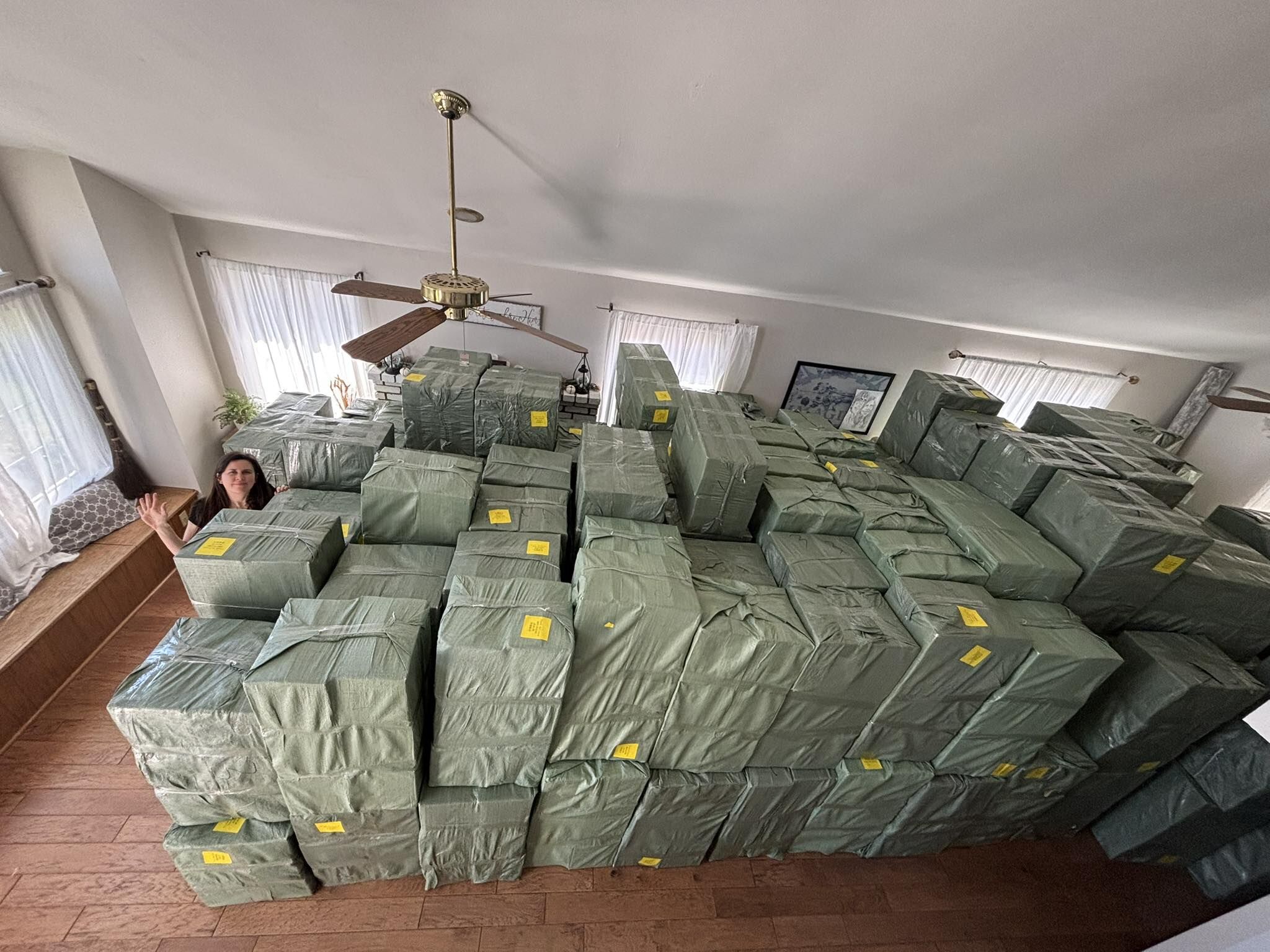
Meet the brand founder
The idea started with a wedding.
Kirstie Rickert loved art. Her husband was a musician. When it came time to get married, something clicked — a sense of wanting to build something that blended creativity with commerce. What exactly that looked like wasn't obvious yet. But the instinct was there.
The early days were not glamorous.
There was no agency to call. No AI tools to lean on. Just YouTube, networking, and the willingness to stay up until midnight figuring it out. She bootstrapped everything. When things broke, she fixed them. When accounts got hacked, she rebuilt. When she lost platforms she had spent months growing, she started over.
Failure wasn't occasional. It was part of the operating model.
What kept her going was momentum — slow, uneven momentum, but real. Each rebuild made the systems a little tighter. Each setback forced a lesson she wouldn't have learned otherwise. By the time the business caught real wind, she had already survived enough that very little could fully derail her.
The first real win
The year COVID hit, everything changed.
Sales went through the roof. The team was strong, the ad buyer was dialed in, and for a stretch it felt like the business had found permanent altitude. Orders kept coming. Revenue climbed. It seemed, briefly, like this was just what the business did now.
It wasn't — and she'll be the first to say so. But what that period revealed was something durable: when all the pieces align, the results are dramatic.
"Great marketing, creatives, funnel, SMS, and email — making sure it was all aligned."
That alignment was the real lesson from the COVID spike. It wasn't luck or timing alone. The machine was working because every layer of the funnel was pointed in the same direction. Top of funnel, middle of funnel, bottom of funnel — the concepts she would later learn to name properly through agency partnerships — were all pulling together without friction.
The business never returned to that exact peak. But she kept the insight: when creative, paid, and retention are synchronized, the numbers move.
How the business runs today
The brand now operates between $200,000 and $600,000 per month — a range that reflects seasonal swings and the ongoing evolution of the business rather than instability.
Kirstie's role today looks nothing like it did in the early years. She is no longer the person executing. Her week is built around reading emails, attending networking events, growing her LinkedIn presence, and staying in regular contact with her teams to make sure the direction is right. The day-to-day runs without her.
That shift didn't happen automatically. It required building a team capable of handling operations, hiring people she trusted with customer-facing decisions, and accepting that her highest leverage was oversight and growth — not execution.
She's also already in motion on her next chapter. After her daughter kept developing rashes, Kirstie started researching what was in conventional diapers. The answer pushed her toward building Cuddle-Kin, a plant-based diaper brand built on safer materials. Her current brand gave her the blueprint. Cuddle-Kin is where her attention is increasingly pointed.
Leveraging experts, agencies & apps
Kirstie knew early that she couldn't do it alone — and moved fast to fix that.
The trigger wasn't strategic. It was obvious: ads weren't being managed, comments and messages were piling up unanswered, and negative sentiment was visibly affecting customers. She needed help, and she needed it immediately. Waiting wasn't an option.
The agencies that had the biggest impact weren't just executors — they were educators. Working with CRO and marketing specialists taught her the language and logic of a real funnel: TOF, MOF, BOF, conversion rate optimization, creative testing. She came in not knowing the vocabulary. She left understanding the mechanics.
Over time, Kirstie built a lean stack – tools that directly impact profit, customer experience, or efficiency.
Klaviyo — email and retention engine, handling flows, campaigns, and segmentation
Postscript — SMS marketing, helping drive repeat purchases and time-sensitive offers
ShipStation — simplifying shipping and fulfillment operations
Shopify Inbox — managing customer conversations and turning questions into conversions
One tool stands above the rest:
TrueProfit — shows her daily profit at a glance, making it immediately clear whether the team's efforts are actually moving the needle or just generating activity
That single source of truth changed how she evaluates performance. Revenue is vanity. Profit is the signal.
Not every hire delivered. In fact, some were expensive lessons. She paid a lot of money to people with excellent sales skills and weak execution skills — agencies who could pitch confidently but couldn't produce the results they promised. The red flags, in hindsight, were there. She moved too fast and didn't dig deep enough into what they had actually built for others.
"Lots of them are fake and haven't truly gotten those results — it's better if you can learn it in-house or get a referral."

Big challenges
The challenges Kirstie faced weren't the kind that show up in business school case studies.
Her Facebook ad account got disabled. Her tax accountant stole her store. She dealt with inventory crises, production delays, and the customer fallout that comes with both. These weren't hypothetical risks — they happened, sometimes in sequence.
Her response was always the same: one problem at a time, and fast. When Facebook shut down the account, she fought to get it fixed while standing up a new Shopify backend in parallel. When production delays threatened customer relationships, she expanded her manufacturing partners so a single bottleneck couldn't hold the whole business hostage.
None of it was clean. All of it built resilience that a more frictionless path never would have.
Advice to brands on their way to 7–8 figures
Kirstie doesn't romanticize the grind. She made expensive mistakes, trusted the wrong people, and spent years doing things alone that she should have delegated sooner. Her advice reflects that.
The biggest shift in her own trajectory came when she stopped thinking it was all on her — and started building the network and team that could carry weight alongside her.
Surround yourself with smart people. The faster you network and build relationships with people who know more than you in specific areas, the faster the business moves. No founder scales alone.
Vet before you hire. Most agencies and freelancers who underdeliver aren't bad people — they're great salespeople with thin track records. Ask for real references. Ask what they've actually built, not what they can pitch.
Learn before you outsource. If you don't understand an area well enough to evaluate performance, you'll never know if you're being taken advantage of. Learn the basics first — then hire someone better than you at it.
Get a profit dashboard, not just revenue. Revenue feels good. Profit tells you the truth. Know your numbers daily, not monthly.
Build to hand off. If the business depends entirely on you for day-to-day operations, it's a job, not a company. Hire toward your own irrelevance in execution so you can stay focused on growth.

What’s next for the brand
The next 12 to 24 months are about transition.
Kirstie is actively looking for an operator or CEO to step into the day-to-day leadership of her current brand. Not because it's struggling — but because her attention has a new destination. Cuddle-Kin, her plant-based diaper brand, is where she's building next.
The origin story rhymes with her first brand: a personal problem, a product gap, and a founder who decides to fill it. Her daughter's recurring rashes turned into a question about ingredients, which turned into a conviction that safer options should exist. Cuddle-Kin is the answer she's building.
The decade of experience she accumulated — the hacks, the rebuilds, the funnel education, the hard lessons about hiring — is now the foundation she gets to build on from day one rather than earn the hard way.
"I thought it was all on me at first."
It wasn't then. It definitely won't be now.
Meet the experts behind brands like this
Scaling a Shopify brand takes more than a good idea – it takes the right people, systems, and partners at the right stage. Meet the experts who support brands like this on shopexperts.com