
Shopify Case Study: How a Custom Sportswear Brand Scaled to $180K/Month
This Shopify case study breaks down how a custom sportswear brand grew to $180K/month through niche demand, viral campaigns, and lean operations. Learn how Ryan Morrison scaled from a university project to a thriving ecommerce business.

Industry
Location


Meet the brand founder
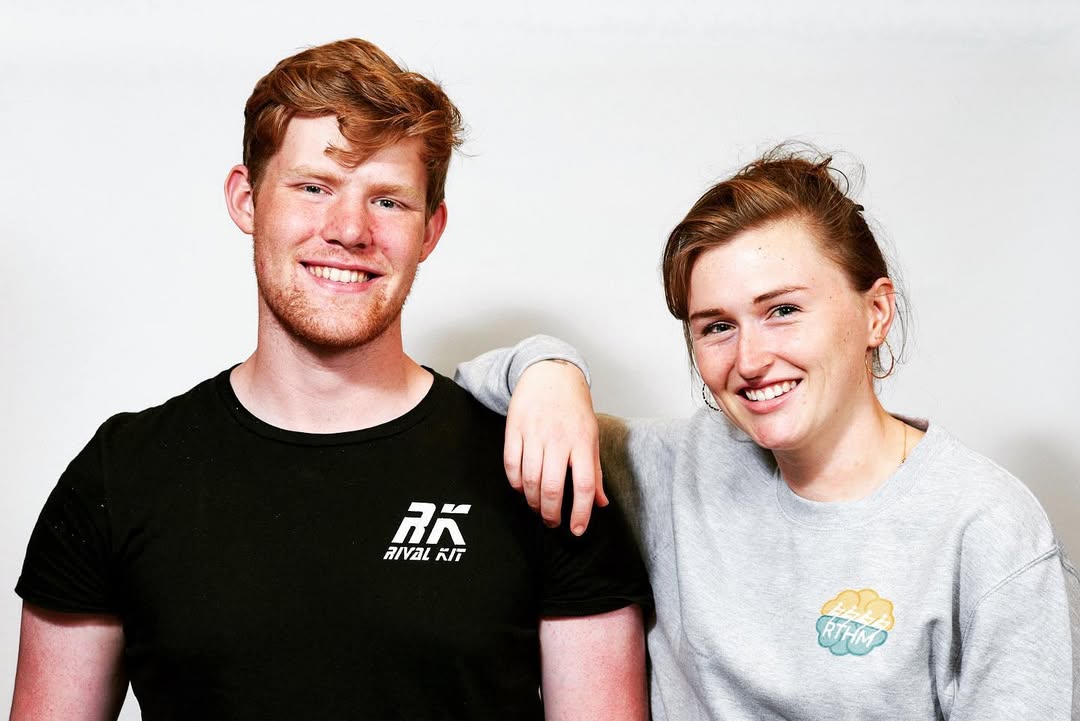
Ryan Morrison is the founder behind the brand, and the idea first emerged while he was serving on the committee of his university rowing club.
Like many student organizations, the club regularly ordered merchandise for its members. But every time the team tried to source new kit, they ran into the same frustrations. High-quality products were difficult to find, minimum order quantities were often huge, and delivery timelines were painfully slow.
On top of that, the designs rarely felt modern or genuinely wearable.
Instead of continuing to fight with suppliers, Ryan decided to experiment with producing a small run of merchandise himself. The goal was simple: better fabrics, cleaner designs, and a faster turnaround for the club.
The reaction surprised him.
Members loved the products, and soon other clubs across the university began asking if they could order something similar for their own teams. What started as a way to solve one club’s problem quickly turned into a growing side project.
Within months, the small experiment had momentum.
But those early days were far from polished.
The entire business was running on Shopify Basic, with orders exported manually into Google Sheets. There was no proper production system, no SKUs, and no barcodes. Shipping labels were written out by hand, and almost every process relied on spreadsheets.
It was scrappy, chaotic, and entirely bootstrapped.
For about six months, Ryan spent nights and weekends testing products, refining designs, and figuring things out through trial and error. When orders finally began increasing more quickly, it became clear that the systems holding the business together would no longer be enough.
That moment forced the first serious upgrades: better software, more structured operations, and advice from anyone willing to share experience – even when the budget for that advice was almost nonexistent.
The first real win
The moment that truly changed the trajectory of the brand came from a campaign that wasn’t even designed to make money.
The team launched a sports T-shirt campaign focused on mental health awareness in sport. Instead of pricing the product for profit, they deliberately sold it at a loss because the goal was impact rather than margin.
What happened next exceeded every expectation.
Within just two months, the campaign generated more than 30,000 orders.
The initiative raised significant awareness around mental health in sport and contributed funds to charity. But it also had an unexpected side effect: the brand suddenly had tens of thousands of customers wearing and experiencing its products.
Those 30,000 shirts became an enormous distribution channel.
The campaign dramatically increased brand awareness and proved that demand for their approach – quality products, fast delivery, and flexible ordering – was real.
After that moment, growth accelerated quickly.
To keep up with demand, Ryan built a small but relentless sales team. Their focus was simple: reach more clubs, teams, and organizations that faced the same merchandising challenges.
While the growth was exciting, it also pushed the company’s early systems to their limits.
To maintain what made them different, the team doubled down on three core promises:
No minimum order quantities
Fast delivery times
Consistent product quality
Those principles became the foundation of the brand’s reputation.
How the business runs today
As the company grew, Ryan’s role evolved significantly.
In the early days, he was responsible for almost everything: sales, operations, customer support, product development, and logistics. Today, his focus is much more concentrated.
He now leads production and product development, ensuring the brand continues to deliver high-quality garments while constantly improving operational processes.
That shift has allowed him to spend more time refining the product range rather than constantly firefighting across the business.
Sales is no longer his primary responsibility, although he still steps in to support key accounts when needed.
A typical week starts with structure.
Each morning begins with clearing emails and turning incoming tasks into a prioritized to-do list. Ryan intentionally leaves around two hours each day open for unexpected issues, which helps prevent urgent problems from disrupting the rest of the schedule.
From there, much of the operational work happens inside the company’s core systems:
Warehouse management
ERP and operational systems
Accounting and banking tools
CRM and customer management platforms
Once operations are stable, the rest of the week shifts toward product development.
That includes testing new garments, working with suppliers, improving existing product lines, and ensuring the company stays ahead of what sports teams and clubs expect from their merchandise.
Leveraging experts, agencies & apps
About two years into the business, growth created a new challenge.
Sales were increasing faster than the team could realistically handle with their existing systems and resources. Something had to change.
The first step was outsourcing certain functions that were necessary but time-consuming.
Bookkeeping was one of the earliest areas to move outside the company. While it might not be the most exciting part of running a business, accurate financial management quickly proved to be essential for maintaining control as the company scaled.
Customer service also began shifting to external support, allowing the internal team to focus on product, production, and operational improvements.
On the technology side, several tools have become essential to daily operations:
Klaviyo plays a major role in customer engagement. The platform allows the brand to run segmented email campaigns and automated flows that keep customers connected to the brand long after their first order.
Tidio powers much of the company’s customer support. After testing multiple platforms, the team found it to be one of the most effective AI-powered systems for delivering fast responses without needing a large support team.
Bulk Edit is another key operational tool. With a large product catalogue, it enables the team to update prices, tags, and product information across hundreds of items using simple rule-based edits.
The company also relies on password-protected collections within Shopify. These allow the brand to create private stores or exclusive collections for specific teams, partners, or campaigns.
Not every external partnership works perfectly, though.
Ryan has learned that alignment matters more than credentials. When agencies or partners aren’t proactive – or when their vision doesn’t match the company’s direction – progress slows quickly.
Today, he prioritizes working with partners who communicate clearly, move quickly, and take initiative without constant chasing.

Big challenges
Scaling the business brought a challenge many growing companies face: keeping operations aligned with sales growth.
At several points, demand began to outpace the company’s production and logistics capacity. Orders were increasing rapidly, but the systems supporting manufacturing and fulfillment weren’t yet built to handle that level of scale.
The team eventually stabilized operations by investing capital into improving production and logistics infrastructure.
However, relying on capital injections alone isn’t a sustainable strategy.
The real long-term solution has been building systems that allow operations to grow at the same pace as sales, while still keeping costs under control.
Balancing those two forces – growth and efficiency – remains one of the most important challenges for the business.
Advice to brands on their way to 7–8 figures
Ryan believes many founders hesitate too long when it comes to investing in the systems that will eventually support their growth.
His advice is simple: commit earlier when you know something will pay off.
Waiting until the last possible moment often makes solutions more expensive and creates unnecessary operational pain. If a system, piece of infrastructure, or hire will clearly improve the business, delaying that investment can end up costing more in the long run.
He also sees many brands make mistakes when working with external experts or agencies.
Too often, founders hand over responsibility too quickly without ensuring the partnership is the right fit.
Before fully committing, he recommends making sure:
Values and vision are aligned
Expectations are clearly defined
Contracts include break clauses if things don’t work out
Most importantly, founders should stay involved until they are confident the work being delivered truly represents their brand.
What’s next for the brand
Looking ahead, the company’s next phase of growth focuses on both product expansion and geographic reach.
Over the next 12 to 24 months, the team plans to broaden its apparel range while continuing to refine its production capabilities.
One major initiative is bringing more production onshore, which could provide greater control over quality and lead times.
At the same time, the brand is preparing for expansion into the European market – an opportunity that comes with both exciting potential and new operational challenges.
If the early journey of the company has proven anything, it’s that solving real problems for customers often creates opportunities far beyond the original idea.
What started as a simple solution for one rowing club has already grown into something much bigger.
And the next stage is only just beginning.
Meet the experts behind brands like this
Scaling a Shopify brand takes more than a good idea – it takes the right people, systems, and partners at the right stage. Meet the experts who support brands like this on shopexperts.com