
Shopify Case Study: How a Standing Desk Brand Scaled to $200K/Month
This Shopify case study explores how a standing desk brand grew to $200K/month during the pandemic by leveraging product-market fit and seasonal demand. Learn how Michael Fan built a 7-figure ecommerce business from scratch.

Industry
Location



Meet the brand founder
Michael Fan didn’t originally plan to start a furniture company.
At the start of 2020, he was studying for the GMAT every morning, preparing to apply for MBA programs in the United States. The goal was clear: gain business education, expand his network, and eventually build something entrepreneurial.
Then the pandemic hit.
Testing centers shut down almost overnight, and the path toward business school suddenly felt uncertain. On top of that, the idea of spending nearly $250,000 on a remote MBA no longer felt like the right investment.
Instead of waiting for the world to reopen, Michael asked a different question: what if he built his own MBA by starting a business?
He and his best friend began reviewing the business ideas they had discussed over the years. One idea stood out: standing desks.
Both were passionate about healthier lifestyles for desk professionals and believed that better workspaces could significantly improve how people feel and perform every day.
So they decided to commit.
In the middle of one of the most chaotic moments in global logistics, they purchased $100,000 worth of standing desk inventory and shipped it to Canada. At the time, container shipping costs had surged to nearly five times their pre-COVID levels, making the decision even riskier.
The early days were intense.
Both founders were still working full-time corporate jobs – one in corporate strategy and the other at Google. During the day they worked their regular roles. At night they learned how to run an e-commerce business.
Everything was built from scratch.
They set up their store on Shopify, negotiated with suppliers, found a 3PL partner, launched advertising campaigns on Google and Meta, and built partnerships with other brands.
This was before modern AI tools existed, so learning meant hours of watching tutorials and digging through forums to find answers.
Every problem required persistence.
The challenges arrived quickly.
Their first shipment of desks was held at the border for inspection, forcing them to pay an unexpected $20,000 out of pocket on top of already inflated shipping costs.
There were moments when the warehouse was full of desks and they wondered how they would sell them all. A few months later, the opposite problem appeared: demand was growing faster than they could fund the next shipment.
The entire period was chaotic, stressful, and incredibly motivating.
And in many ways, it forced them to develop the resilience and problem-solving mindset that would later fuel the company’s growth.
The first real win
For many founders, there’s a specific moment when a side project suddenly feels like a real business.
For Michael and his co-founder, that moment came during Black Friday 2021.
Up until that point, the business had been growing steadily but cautiously. Monthly revenue had reached around $30,000, which was encouraging but still felt fragile.
The founders weren’t sure yet whether the growth was sustainable or just early momentum.
Then Black Friday arrived.
During that single month, revenue jumped from $30,000 to $90,000, effectively tripling overnight.
That was the moment everything changed.
Suddenly the business no longer felt like an experiment – it felt like something real.
Ironically, only weeks earlier the founders had been worried about ordering too much inventory. Because a 40-foot container was only about $1,000 more expensive than a 20-foot container, it made sense to increase order size to improve unit economics.
After Black Friday, the problem flipped completely.
Instead of worrying about excess inventory, they were suddenly scrambling to find more desks. Demand was growing faster than their supply pipeline.
For the next several months, the team focused on securing new shipments and shortening their days of supply as sales continued climbing.
That momentum revealed something important: the company had found genuine product-market fit.

How the business runs today
As the company grew, Michael’s role shifted dramatically.
In the beginning, the founders handled every task themselves – building the website, managing supply chains, running ads, answering customer support tickets, and coordinating logistics.
That hands-on experience helped them understand every moving part of the business.
Over time, however, it became clear that not all activities contribute equally to growth.
A few key factors drive the majority of results:
Understanding demand seasonality
Scaling the right marketing channels
Developing strong advertising creative
Continuously improving the product
Today, Michael focuses primarily on those high-impact areas.
Much of his time goes toward strategy, performance marketing, and growth planning, especially around scaling acquisition channels like Meta.
Customer service and logistics, which once consumed large portions of his time, now require far less day-to-day involvement.
A typical week is largely focused on analyzing performance metrics, reviewing marketing campaigns, testing new creative angles, and identifying opportunities to improve conversion rates or average order value.
The biggest change from the early days is perspective.
Instead of trying to do everything personally, the goal now is to focus only on the decisions that meaningfully move the business forward.
Leveraging experts, agencies & apps
The company started fully bootstrapped, with the founders doing almost everything themselves.
Over time, however, they realized that founders shouldn’t spend their time on tasks that others can handle more efficiently.
The key question became: what are the core competencies we need to own internally?
Everything else could potentially be outsourced.
Several areas had a particularly strong impact when external experts were brought in.
Customer service support helped reduce the operational load on the founders. Conversion rate optimization specialists improved the website experience. Development partners helped implement new functionality more efficiently than the internal team could manage alone.
On the technology side, several Shopify tools play an important role in the business today.
Better Reports provides deeper insights into inventory and operational performance, which is critical for planning future shipments.
Recharge powers the company’s subscription functionality, allowing customers to reorder accessories and complementary products more easily.
Okendo manages customer reviews and social proof, helping build trust with new shoppers visiting the site.
Not every partnership worked perfectly.
One of the biggest lessons was learning how to evaluate agencies and experts more effectively. Many promise strong results, but it’s often difficult to determine who can actually deliver.
Over time, the founders became better at spotting red flags during hiring conversations and setting clearer expectations from the start.

Big challenges
Rapid growth brings its own set of problems.
For this business, the biggest challenge has been cash flow management while scaling quickly.
When a company is growing at 100% year over year, nearly all profits must be reinvested back into inventory, marketing, and operations. In many cases, additional capital is needed just to fund the next stage of growth.
From the outside, rapid expansion looks exciting.
Behind the scenes, however, it often means that systems break under pressure.
Supply chains become strained, inventory planning becomes more complex, and operational mistakes become more expensive.
Managing those challenges while continuing to grow has been one of the most demanding parts of the journey.
Advice to brands on their way to 7–8 figures
For founders aiming to scale toward $5–10 million in annual revenue, Michael believes that many challenges can be avoided by understanding the fundamentals early.
The most important factor is unit economics.
Margins, product costs, shipping expenses, and marketing efficiency ultimately determine which strategies are viable. Without a clear understanding of those numbers, scaling becomes much more difficult.
Hard work will always be required, but the underlying business model matters just as much.
He also believes founders should stay more involved when working with external partners.
Apps and agencies can be extremely helpful, but they are not magic solutions. In many cases, agencies assign junior team members to manage accounts, which means founders still need to actively guide strategy and follow up on progress.
Setting clear expectations and staying engaged with partners ensures the work delivered actually supports the brand’s goals.
What’s next for the brand
Since this case study was first written, the story has come full circle.
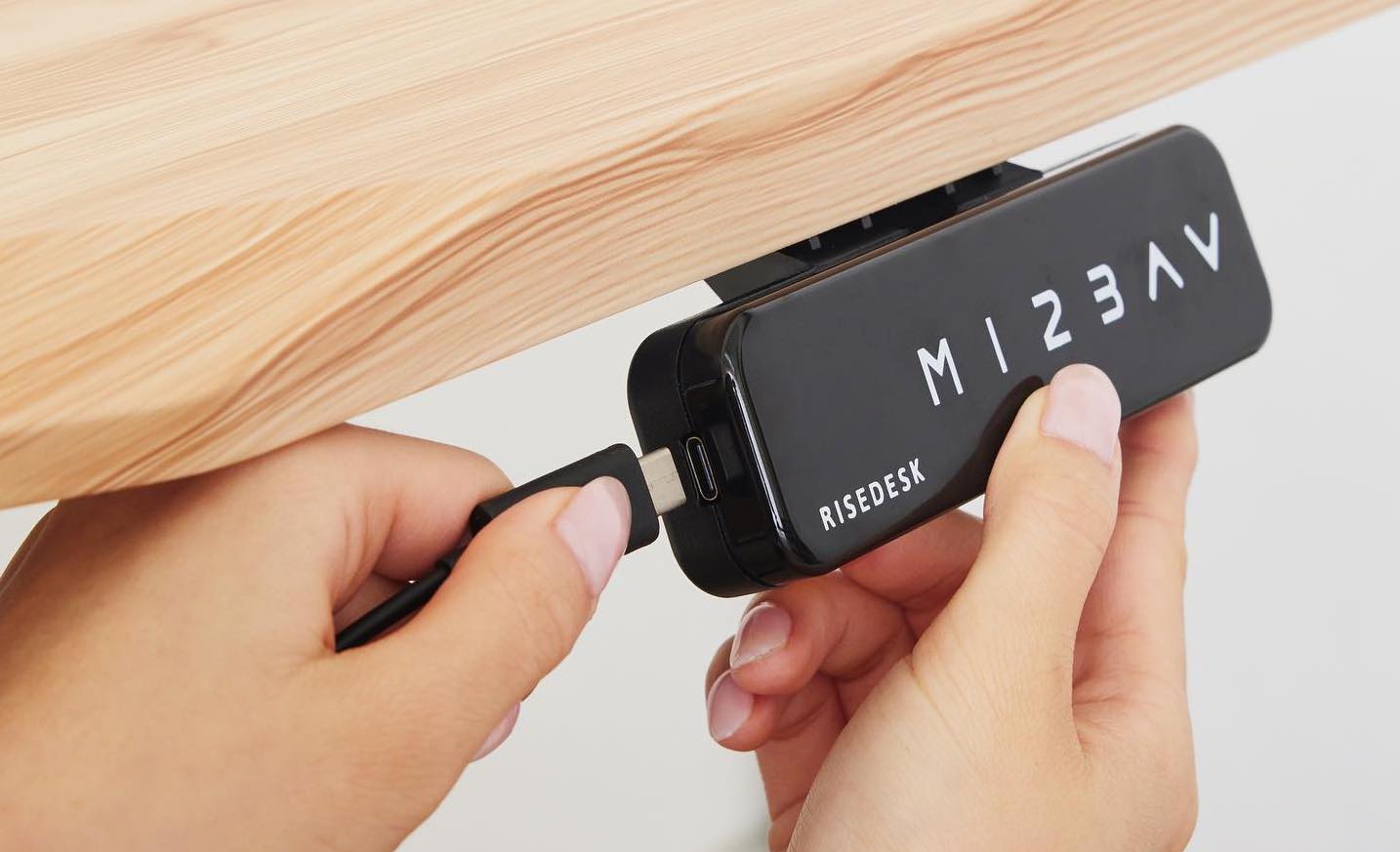
RiseDesk has been successfully acquired by a private equity-backed platform, transitioning the business into a larger portfolio of workspace and furniture brands. In the near term, the focus is on integration – aligning operations, expanding distribution, and leveraging shared infrastructure to unlock the next phase of growth.
It’s a different chapter for the brand, but one that creates more upside than operating independently.
For Michael, the transition also marks a shift in focus.
He is now leading e-commerce and performance marketing at Greenhouse, where the team is scaling rapidly across DTC, Amazon, and TikTok Shop. The business, particularly its ginger shot line, is growing at strong double-digit rates, supported by a high-performing subscription model and multi-channel acquisition strategy.
That playbook is explored in more detail in this Shopify case study on how Greenhouse scaled a nationwide juice brand, where many of the same principles around product-market fit and execution continue to apply.
If anything, this next phase reinforces a core theme of the journey: building the right fundamentals early creates opportunities far beyond the original plan.
Meet the experts behind brands like this
Scaling a Shopify brand takes more than a good idea – it takes the right people, systems, and partners at the right stage. Meet the experts who support brands like this on shopexperts.com